Flexiv unveils adaptive Enlight and Mico robots for industrial automation
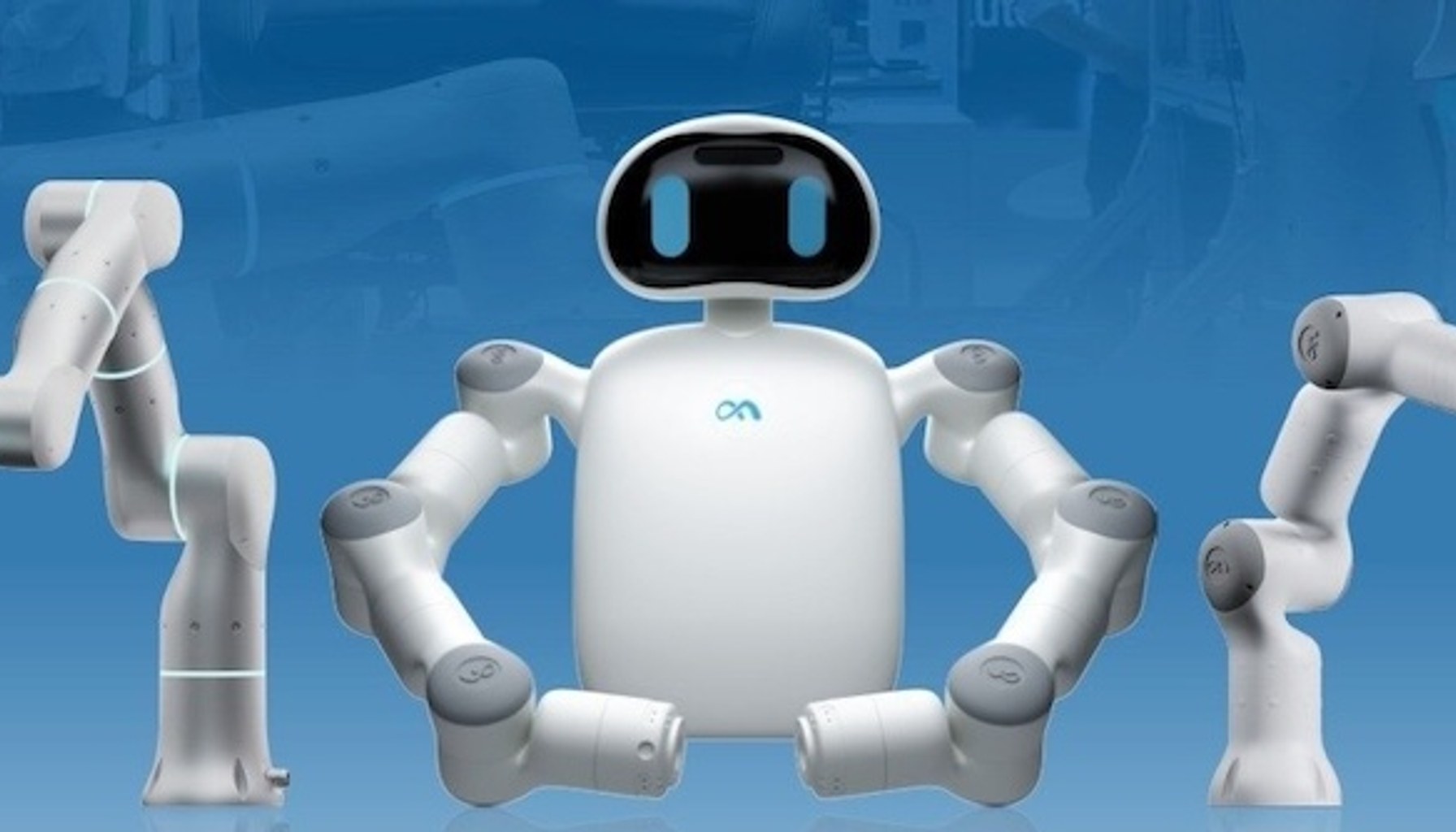
Image / Robotics & Automation News
Flexiv's new adaptive robots promise a factory that learns on the line. The company introduced two platforms, Enlight and Mico, designed to bring greater tactile sensing and physical AI capabilities to industrial automation. The flagship Enlight is described as a seven-axis adaptive robot, built to combine precise force control with an evolving understanding of how objects feel and respond in real time. The Mico platform is a dual-arm system intended to handle more complex manipulation tasks, expanding what a single robotic cell can accomplish without constant reprogramming.
Flexiv markets Enlight and Mico as a meaningful leap in force controlled robotics and embodied intelligence. In practical terms, that means the robots are meant to adjust their grip, speed, and motion based on how the workpiece responds during a task, rather than sticking to a fixed, pre programmed sequence. For operations teams, the promise is clearer changeovers, fewer manual tune ups, and a higher degree of task tolerance. While the company has not published a full spec sheet in this release, the emphasis on tactile sensing points to handling variability that typically trips standard automation, such as soft touch assembly, delicate parts, or inconsistent line conditions where a rigid robot struggles.
From a plant floor perspective, the potential impact on cycle times and throughput hinges on task type and integration. For high mix, low volume lines, adaptive robots can shorten restart times between jobs by reducing the amount of reprogramming needed when a line shifts to a new product or component. For repetitive, precision focused tasks, the enhanced force control and embodied intelligence can improve first pass yields by more consistently handling parts that require subtle feedback. Deployment data and case studies will be the proving ground, but the architecture is deliberately designed to plug into typical automation stacks rather than demand an entirely new cyber physical spine. In other words, these are not magic wands; they are intended to operate within existing PLCs, robot controllers, and safety frameworks while providing smarter decision making at the point of contact.
The integration footprint to watch is real and not trivial. Plant managers eyeing a rollout will want clarity on how Enlight and Mico interface with grippers, sensors, and vision systems, and how quickly a factory can progress from a pilot to stable production without compromising safety. Vendors that promise learning based adaptation often hinge on software updates, edge computing capacity, and data interfaces with the plant’s quality and maintenance systems. For CFOs and operations leaders, the ROI picture will depend on the balance of upfront cost, the cadence of productivity gains, and the cost of change management. If the robots live up to the tactile and AI claims, offsets could come from shorter changeover times, improved consistency, and the ability to tackle more tasks in a single cell.
Skilled trades in manufacturing tend to be augmented, not replaced, by these capabilities. Enlight and Mico are positioned to take over tasks that require fine touch and dynamic adjustment, freeing machine operators, inspectors, and maintenance technicians to focus on setup, exception handling, and process improvement. The risk, as with any embodied intelligence push, is overestimating the system’s ability to generalize without careful calibration and ongoing tuning. Early deployments will reveal how well the force control and tactile sensing hold up under real world variability and whether integration overhead is outweighed by gains in uptime and output.
In the near term, the headlines will hinge on real world performance data: cycle times, throughput, and the speed of meaningful changeovers once production lines are live. If Flexiv can translate its adaptive vision into measurable gains on the floor, Enlight and Mico could become a reference design for a new generation of automation that behaves less like a fixed machine and more like a responsive team member.
- Flexiv launches new ‘adaptive robots’ for industrial automationRobotics & Automation News / Trade / Published JUN 26, 2026 / Accessed JUN 26, 2026