Musashi AI unveils Gen 2 inspection system
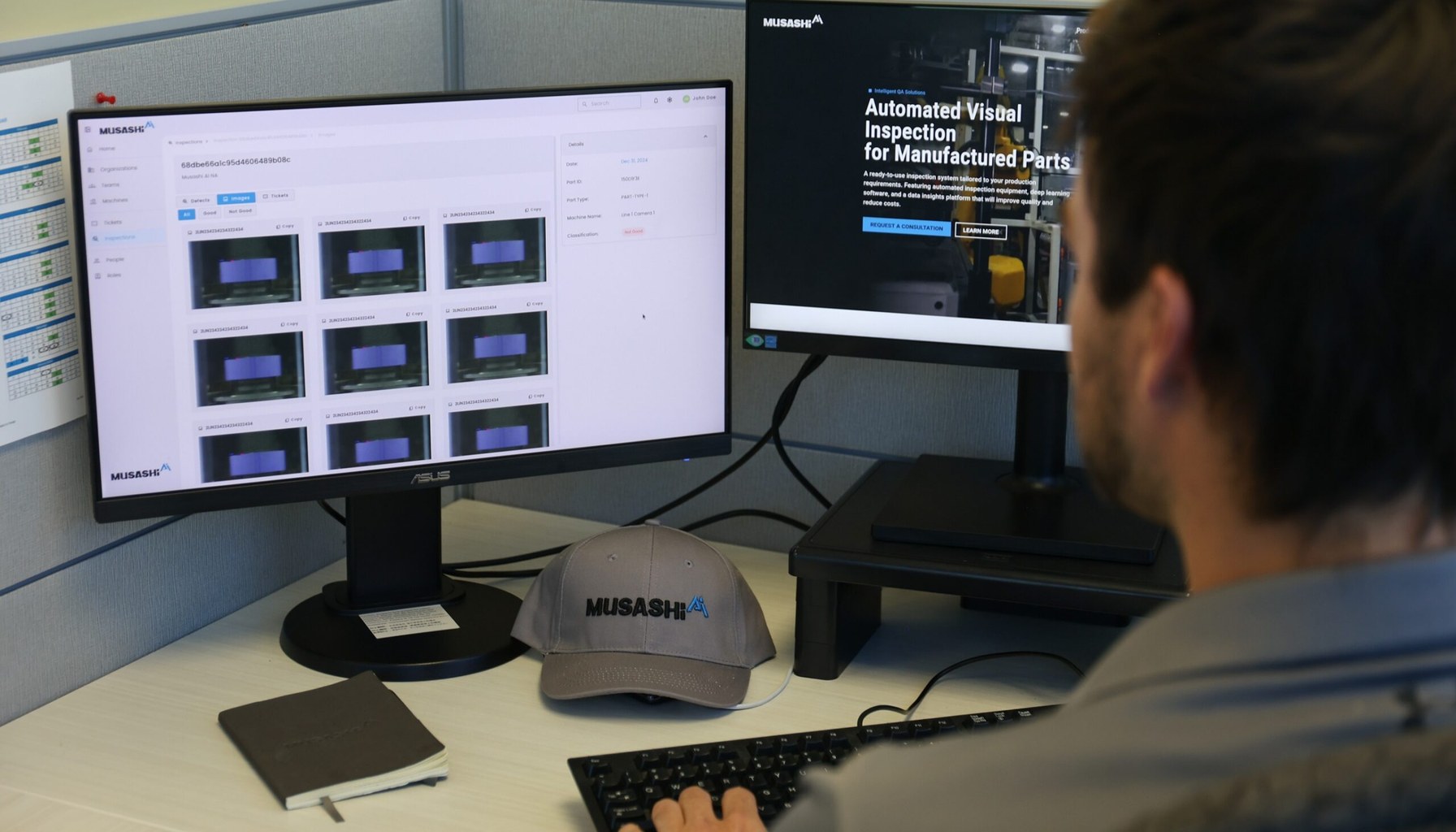
Image / Design World
Musashi AI's Gen 2 inspection system promises faster quality checks. The company is returning to Automate in Chicago, June 22 to 25, to show the commercial configuration of its second generation Cendiant inspection platform and updates to its Cendiant Quality Insights software, signaling a more mature option for AI driven visual inspection on the factory floor.
At the heart of Gen 2 are deeper learning models designed to sharpen defect detection across a range of part geometries and surfaces. Musashi AI emphasizes that the Gen 2 system builds on the lessons of the first generation by improving inference accuracy and response times in real time, with software updates intended to give manufacturers clearer visibility into inspection outcomes. The show will feature a live demonstration of the system, illustrating how the new configuration integrates camera feeds, lighting, and edge processing into a cohesive QC workflow.
What the company is careful to stress is practicality. The Gen 2 release is positioned as a production ready configuration, not a research prototype. That distinction matters for plant managers and CFOs evaluating automation investments, because it signals a path to deployment with fewer unknowns around installation complexity and on-line performance. The Cendiant Quality Insights software is part of the package, providing analytics that translate visual findings into actionable metrics for operators and quality teams. The emphasis on software updates alongside the hardware upgrade points to a broader trend in AI inspection: ongoing model refinement and better data storytelling to drive decisions on the line.
Exact numbers on cycle times, throughput, or defect capture improvements were not disclosed in the launch materials. Musashi AI has flagged that real world results will emerge from demonstrations and deployments, and it is common for the industry to align expectations with the reality of line speed and image capture constraints. In practice, factories often juggle competing priorities: higher inspection rigor can slow lines if the hardware or processing stack bottlenecks. The Gen 2 readiness posture, commercial configuration plus software optics, suggests Musashi is aiming to reduce that risk by offering a more plug-and-play approach than experimental systems.
From an integration standpoint, the Gen 2 proposition will all hinge on compatibility with existing line equipment. Plants considering adoption should anticipate requirements around camera interfaces, lighting consistency, and networking to feed the Cendiant Quality Insights dashboards. While the core value proposition is automated visual inspection, the practical payoff for operators and quality engineers is the combination of faster defect signaling and clearer data for root-cause analysis. The system is designed to augment the inspection workforce, enabling humans to focus on anomalies that require judgment while the AI handles repetitive checks at scale.
As with any factory automation, ROI will hinge on how quickly the system can be wired into daily workflows without introducing undue disruption. Performance will be judged not just by defect detection rates but by the net effect on cycle time, rework costs, and the ability to respond to quality excursions in real time. The Gen 2 inspection system represents a concrete step toward that balance, offering a tested configuration and software suite intended to shorten the path from deployment to measurable QC improvements.
Industry watchers will want to see longer-term outcomes once users move from demonstrations to live production across multiple lines. If Musashi AI can deliver consistent gains in reliability and actionable Insights without adding complexity to the line, Gen 2 could become a meaningful option for plants evaluating AI driven QC at scale.
- Musashi AI introduces Gen 2 inspection systemDesign World / Trade / Published JUN 22, 2026 / Accessed JUN 22, 2026