RealSense D585 Pro Brings Edge AI Perception to Robots
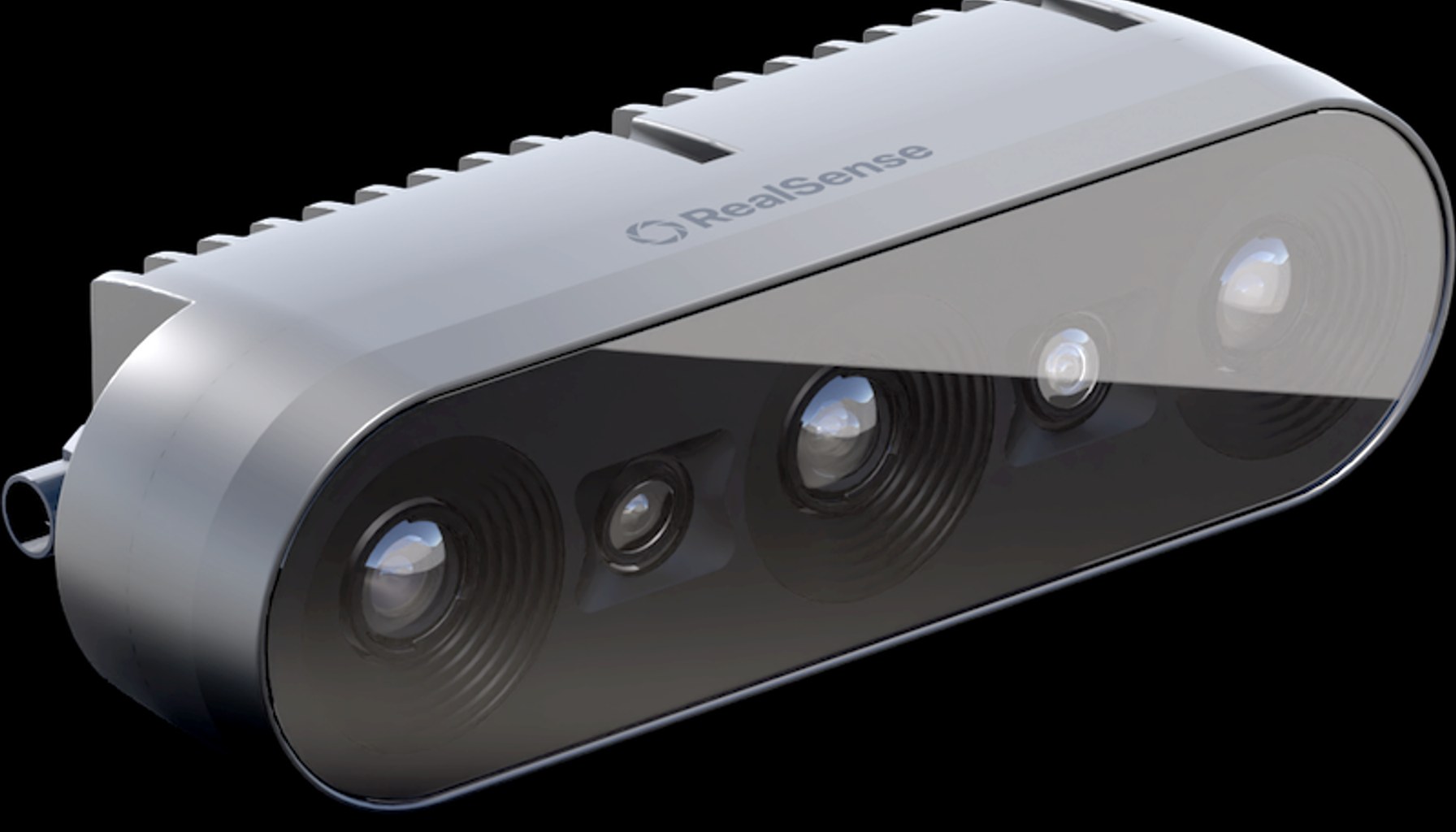
Image / The Robot Report
Robots just gained a brain in the camera. RealSense unveiled the D585 Pro AI-native depth camera at Automate 2026, in booth 12036, positioning a single sensor as both depth sensor and edge AI accelerator through a software-defined platform.
The company says the D585 Pro blends depth sensing with an on-board AI inference engine and a software layer that will mature through SDK updates instead of new hardware. A proprietary Gen 5 system-on-chip drives the device, which RealSense claims delivers more than 2x better depth quality than its previous generation cameras. With on-device AI processing, developers can run the full depth and image processing pipeline at the edge, reducing the need to shuttle data back to host machines and enabling new robot capabilities without heavy server reliance.
Specifications are aimed at practical robotics deployments. The D585 Pro offers a sub-15 centimeter minimum range at full resolution, a wide 120 by 100 degree field of view at 60 frames per second, and IP65 protection as standard. In the company’s phrasing, the camera is designed to function from under 15 cm to beyond 10 meters, indoors or outdoors, and to support evolving perception capabilities through software updates rather than hardware swaps. Nadav Orbach, RealSense CEO, calls it “the actualization of the Visual Cortex of Physical AI,” underscoring the shift from fixed sensors to perception platforms that mature over time via software.
RealSense says the D585 Pro is built for humanoids, autonomous mobile robots, collaborative robot arms, industrial robotics, and inspection systems. The device’s edge AI engine runs directly on the camera, a design choice intended to cut latency and ease integration with perception pipelines on robots that need immediate depth-informed decisions for navigation, manipulation, and human-robot interaction. The company reports early positive feedback from robotics players, reinforcing its belief that developers are ready for a depth camera that combines sensing, AI, and software-defined capability in a single package.
The timing signals a near-term testing-to-production path. RealSense notes that the D585 Pro is expected to begin shipping in the first quarter of 2027, signaling a move from concept and lab validation toward broader pilot deployments and customer production lines. This aligns with the broader industry push to shrink compute loads on robots by pushing perception and basic AI onto the sensor edge, while maintaining a software ecosystem that can keep up with evolving task requirements without hardware churn.
From a practitioner’s view, the D585 Pro offers several meaningful implications. First, the software-defined angle is attractive for fleets that need continuous improvement without downtime for new hardware, but it also raises the stakes for SDK stability and backward compatibility with existing perception stacks. Second, edge AI on the camera promises lower latency and reduced bandwidth needs, but it imposes tighter power, thermal, and form-factor constraints that must be accounted for in robot design, especially on mobile or humanoid platforms. Third, the broad depth range and the claim of high-quality depth at both near and far distances will require robust calibration and sensor fusion with other payloads such as LiDAR or stereo sensors in typical production lines. Fourth, the IP65 rating helps floor environments, but outdoor sunlight conditions and fast-moving scenes will still demand careful testing to verify performance across real-world lighting and occlusion scenarios.
What to watch next: how SDK updates translate into concrete new capabilities on existing production lines, how developers adopt the D585 Pro in perception stacks, and what price and supply look like as shipments begin. RealSense’s emphasis on a single, upgradable depth platform mirrors a broader industry trend toward hardware that anticipates software-driven capability growth, a design choice that could shorten time to deployment for complex humanoid and AMR use cases, and push the limits of what a sensor alone can reliably do in dynamic environments.
- RealSense unveils AI-native D585 Pro depth camera for robotsThe Robot Report / Trade / Published JUN 18, 2026 / Accessed JUN 22, 2026