Tiny drive, big safety boost for automation
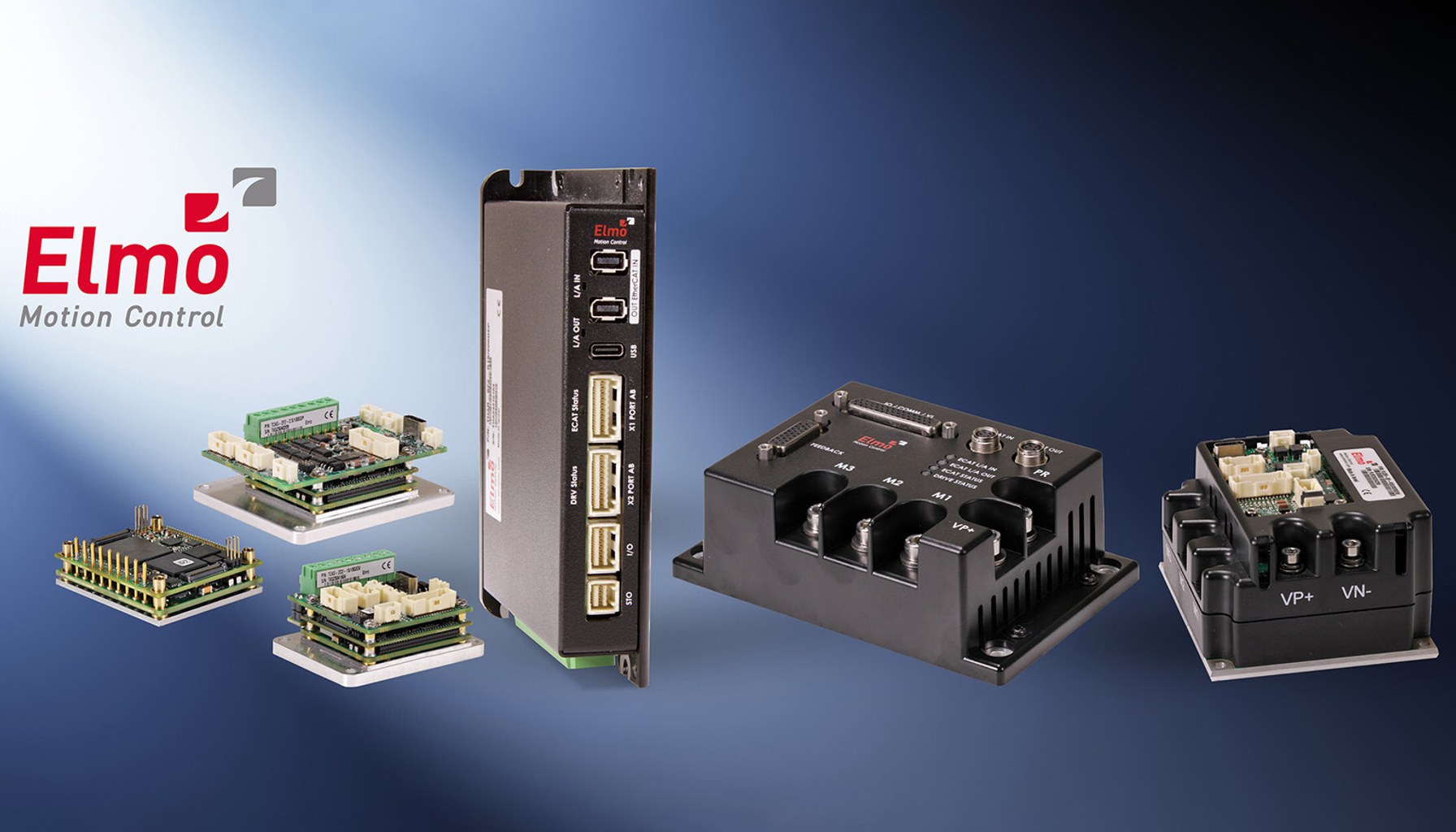
Image / The Robot Report
A matchbox sized servo drive now carries functional safety.
Elmo Motion Control Ltd. rolled out a new slate of motion control hardware for industrial and harsh environments, led by its Titanium line which expands the company’s Platinum family. The lineup centers on the Titanium Castanet servo drive, advertised as a compact dual-axis device with built in functional safety in the size of a matchbox. Elmo says the five new Titanium products push power density higher, deliver more intelligence at the drive level, and cut the amount of safety cabling and external hardware required. The company contends these traits help OEMs design more compact, safer, and easier to certify motion systems.
The launch comes as automation teams face pressure to deliver reliable performance in tough settings. Elmo emphasizes that safety is no longer a bolt on feature but a foundational capability embedded directly into the drive and controller. Elizabeth Victor, director of sales at Elmo U.S., explained that functional safety integrated into the motion subsystem can reduce the need for additional safety cages and external interlocks. “Our customers need more than just compact size and power density,” she said. “Functional safety is critical for many automation systems and can reduce or even eliminate the need for safety cages. By integrating functional safety into our controllers and servo drives, we enable OEMs to implement safety features at the foundation of their motion subsystem.”
Elmo is framing the Titanium line as well suited for operations that endure wide temperature ranges, altitude shifts, sea depth exposure, humidity, and vibration. The company claims the drive level features lessen the amount of safety and hardware cabling, while expanding multi-axis capability in a smaller footprint. With Automate 2026 in Chicago on the horizon, Elmo plans to showcase Titanium products, including the Castanet servo drive, at Booth S-3601. The event is positioned as a proving ground for how the new devices perform in real production lines and in environments that stress traditional automation hardware.
From a practitioner perspective, the deployment data shows that embedded safety at the drive level can streamline design and certification workflows, potentially shortening time to deployment. The case study reports that customers can begin with a smaller control cabinet and gradually augment the system with host PLCs and safety modules as needed, rather than building out large safety enclosures from the start. This introduces a clear ROI path, though it also shifts the engineering burden toward early integration work and a deeper cross-functional review of machine safety architecture. For plant managers and installation teams, the message is to plan for tighter coupling between motion hardware and safety logic, and to factor in new maintenance practices around intelligent drives that host diagnostics and fault reporting.
Practitioner insights anchor the practical reality behind the pitch. First, cycle times and throughput will hinge on the specific application and how much safety logic is carried at the drive level. In high-speed, multi-axis work, the Titanium line can reduce wiring and panel complexity, but the thermal profile of densely packed drives in continuous operation remains a constraint to watch. Second, integration requirements matter. Expect tighter collaboration with system integrators and control engineers to align drive level safety with the host PLC and robot or machine logic, and to map safe states across fault modes. Third, skilled trades implications are real. Electrical technicians and automation engineers will need to coordinate closely with safety certification teams as a drive based approach changes how safety is implemented and verified on the line. Finally, what to watch next is deployment in diverse industries and real world uptime data. Deployment data shows the industry will want to see how the Titanium family performs across line changeovers, maintenance windows, and long-term reliability in extreme environments.
In short, Elmo’s Titanium line claims to bring safety directly into the motion subsystem, enabling safer, more compact, and potentially faster-to-certify automation. The question for operations leaders is whether the anticipated gains in wiring reduction, safety rationalization, and power density translate into meaningful cycle time improvements and throughput in their specific applications.
- Elmo releases new motion controller and servo drives for industrial applicationsThe Robot Report / Trade / Published JUN 19, 2026 / Accessed JUN 20, 2026