Simulation Is Center Stage in Humanoid Robot Race
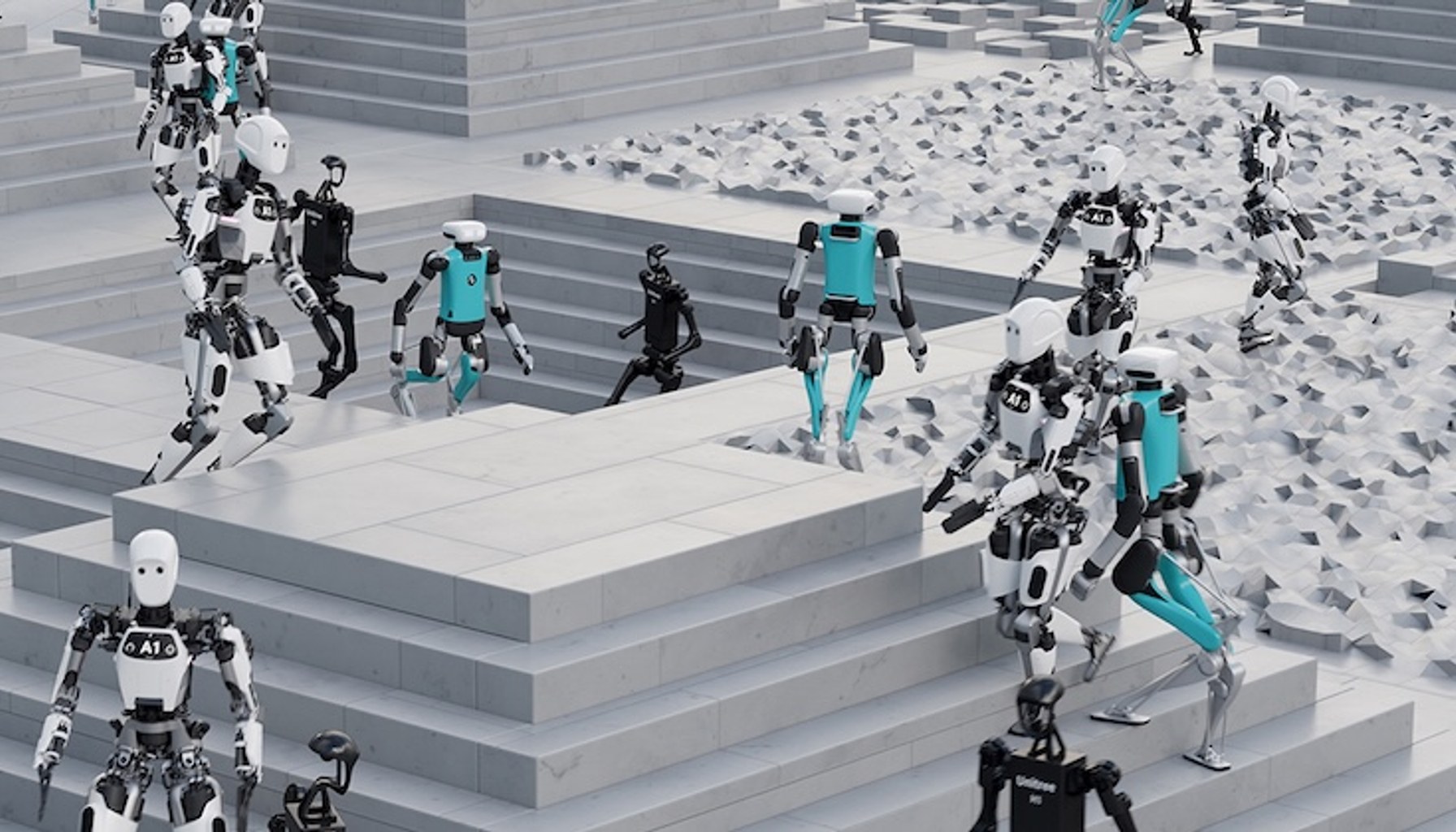
Simulation is central to building humanoids, Li says.
The robotics industry is riding a wave of investment, media attention, and ambitious promises about humanoid machines. Companies announce plans to manufacture thousands of robots, while artificial intelligence advances fuel hopes that general purpose factory ready humanoids are just around the corner. Yet in the eyes of Yunzhu Li, a Columbia professor and co founder of SceniX, the real bottleneck and the real enabler is not the hardware but the virtual world used to design, test, and verify every move before a single actuator is mounted on metal. The interview frames simulation as the central thread tying theory to practice, the bridge between a clever algorithm and a reliable robot in the real world.
Li argues that modern humanoid development hinges on scalable, physics informed simulation platforms that can host end to end workflows. In her view, teams are building digital twins of autonomous systems and subjecting them to a wide range of conditions, different terrains, payloads, sensor noise, and contact rich manipulation to stress test locomotion, balance, and manipulation policies long before touching hardware. This shift toward sim first testing aims to shrink the gap between what a controller can do in code and what it can do on a legged platform, reducing the risk of costly real world failures during hardware prototyping. Testing shows that a rigorous, simulation driven approach can surface edge cases, validate safety assumptions, and accelerate iteration cycles across subsystems.
The SceniX story, as portrayed in the interview, highlights a broader industry trend: investors and operators want predictable deployment timelines and verifiable performance. The emphasis on simulation is not merely about elegance or speed; it is about making humanoid concepts scalable and repeatable. If a team can demonstrate robust behavior in a virtual crucible where countless scenarios are explored and re run with different physics settings, the path to hardware becomes clearer, cheaper, and more defensible to stakeholders who are funding production ambitions.
From a practitioner’s lens, the centrality of simulation brings concrete, non glamorous tradeoffs. High fidelity physics models are powerful, but they demand substantial compute and careful calibration to avoid a fake sense of realism known as the sim to real gap. Engineers must decide where to invest: richer contact models for manipulation and balance, or faster simulators that let teams sweep policy spaces and stress test perception under noise. Either way, the value lies in the data pipeline that translates learned behaviors in simulation into reliable real world performance. Hardware in the loop testing becomes not a luxury but a necessity to catch sensor and actuator mismatches that a virtual world cannot perfectly predict.
The interview underscores a practical expectation: the industry will increasingly view simulation as the primary gatekeeper for humanoid readiness. Operators should watch for two developments in particular. First, the adoption of scalable, cross domain simulation ecosystems that can handle the complexity of humanoid dynamics at realistic speeds. Second, stronger emphasis on validating sim derived policies with real hardware through iterative, tightly integrated workflows, so that the last mile from virtual success to physical reliability is not an afterthought. If Li’s view holds, the next phase of humanoid robotics will be defined less by what a robot can do in a demo and more by what a simulator proves it can do under the messy realities of the real world.
In short, the industry’s hype may keep headlines bustling, but the practical path to mass market humanoids runs through the server rooms and digital twins that test and prove, before a single wire is connected, that a robot can move, sense, and interact safely in the world it is built to inhabit.
- Interview with Columbia professor and co-founder of SceniX Yunzhu Li: ‘Simulation is central’Robotics & Automation News / Independent source / Published JUN 05, 2026 / Accessed JUN 06, 2026