Olo Simplifies Robot Programming for Everyone
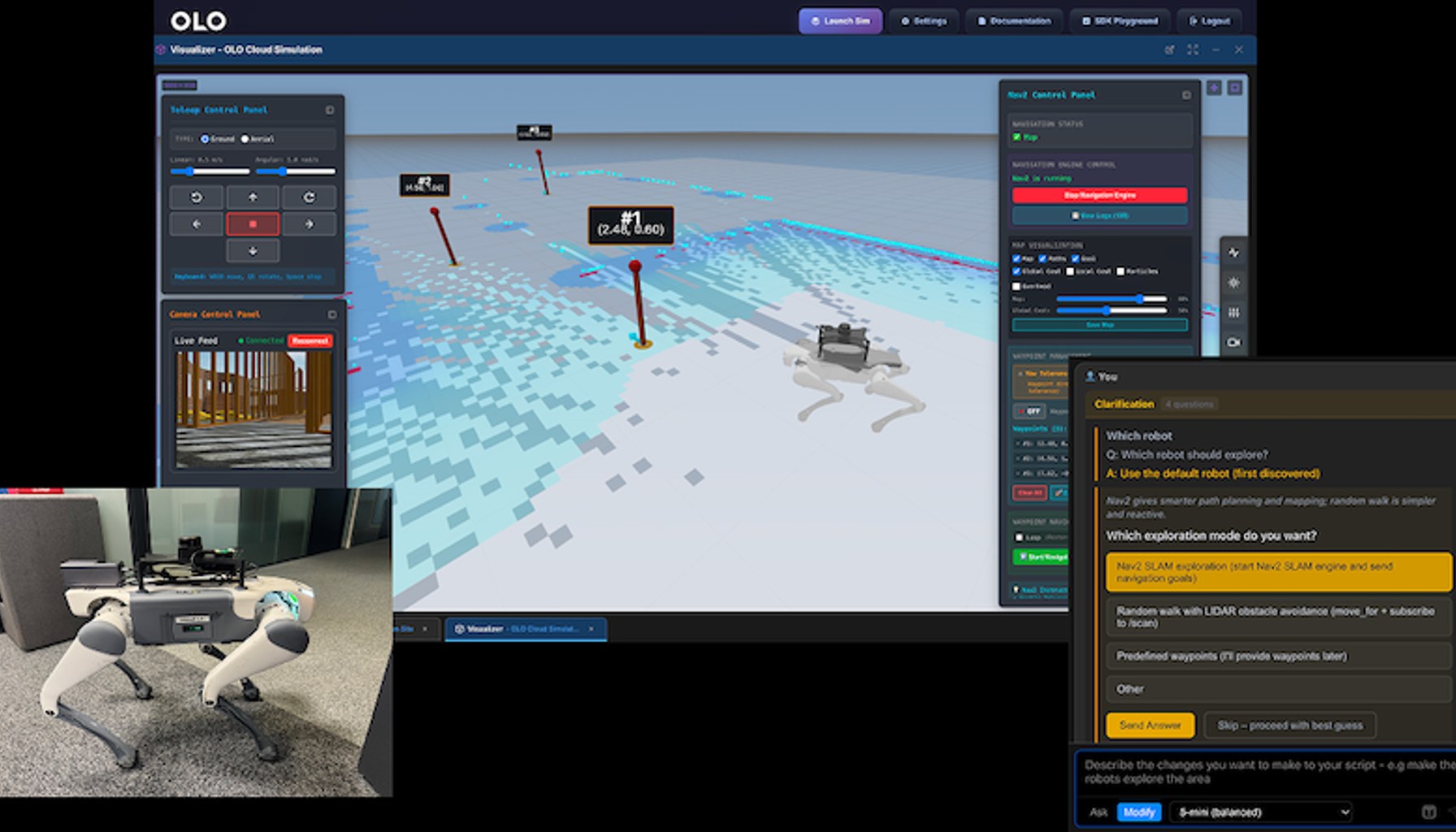
Image / Robotics & Automation News
Robot programming just got democratized. An interview with Eleanor Tang-Smith, COO of Olo Robotics, lays out a blunt reality: hardware has surged ahead, but software has kept many teams on the sidelines.
The company reports that robotics hardware has advanced rapidly, with autonomous mobile robots, quadrupeds, robotic arms, and even humanoid platforms becoming more capable and affordable. Yet building robotic applications remains a software problem that often requires specialist knowledge of platforms such as ROS 2. Olo’s stated mission is to lower that barrier so operators without deep software training can program and deploy robots more directly, without getting lost in code stacks.
That ambition translates into a practical shift in how teams think about building robot applications. The interview indicates that the goal is to move away from bespoke, one-off coding toward more approachable interfaces and repeatable workflows that expose core capabilities without forcing teams to master ROS 2 from scratch. In Tang-Smith’s view, democratizing programming means harnessing today’s hardware power while eliminating the most prohibitive software bottlenecks.
From a practitioner’s lens, several implications emerge. First, onboarding and prototyping could accelerate as people from non-software disciplines participate earlier in the development cycle. When a plant floor manager, controls engineer, or service technician can contribute directly to robot behaviors, pilots can move from concept to live testing faster. Second, there is a clear tradeoff to watch: abstraction can speed up workflows but risks masking important decisions around motion planning, sensor fusion, and fault handling. If teams rely on higher level interfaces without understanding underlying assumptions, debugging and performance optimization could suffer when real-world edge cases arise. Third, safety and validation will remain non negotiable. Even as programming becomes easier, rigorous testing, simulation, and formal checks must scale with simplicity to prevent brittle deployments. Fourth, the ecosystem question looms large. Without deep ROS 2 expertise, organizations may depend more on vendor support, documentation updates, and integration guarantees to keep systems secure and up to date. The business case will hinge on the balance between faster deployment and the cost of training and ongoing support.
The interview also signals a broader industry trend: the reward for getting software development right could hinge on repeatable, auditable workflows that bridge hardware capability and operator intent. As more teams pursue lab-to-pilot-to-production trajectories, the ability to demonstrate measurable improvements in deployment time, reliability, and maintainability will determine whether these more accessible tools become a lasting shift or a passing convenience.
What to watch next is telling. Expect to see early pilots report how much time they saved bringing a concept to a working robot, and whether the easier programming model maintains predictability as system complexity grows. Look for signals on safety incidents or fault rates during scaling, and for how vendors handle updates when hardware platforms evolve. If Olo’s approach proves durable, it could redefine the pace at which factories, warehouses, and service environments move from experiments to steady operations.
The interview with Tang-Smith makes one thing clear: the barrier to robotic adoption is no longer just hardware. The real bottleneck is software literacy, and by lowering that hurdle, Olo aims to widen the field of who can design and deploy robotic systems.
- Interview with Olo Robotics COO Eleanor Tang-Smith: Making robot programming accessible to everyoneRobotics & Automation News / Trade / Published JUN 22, 2026 / Accessed JUN 22, 2026